English| EUR
Suggested for you
More currencies
Choose a language
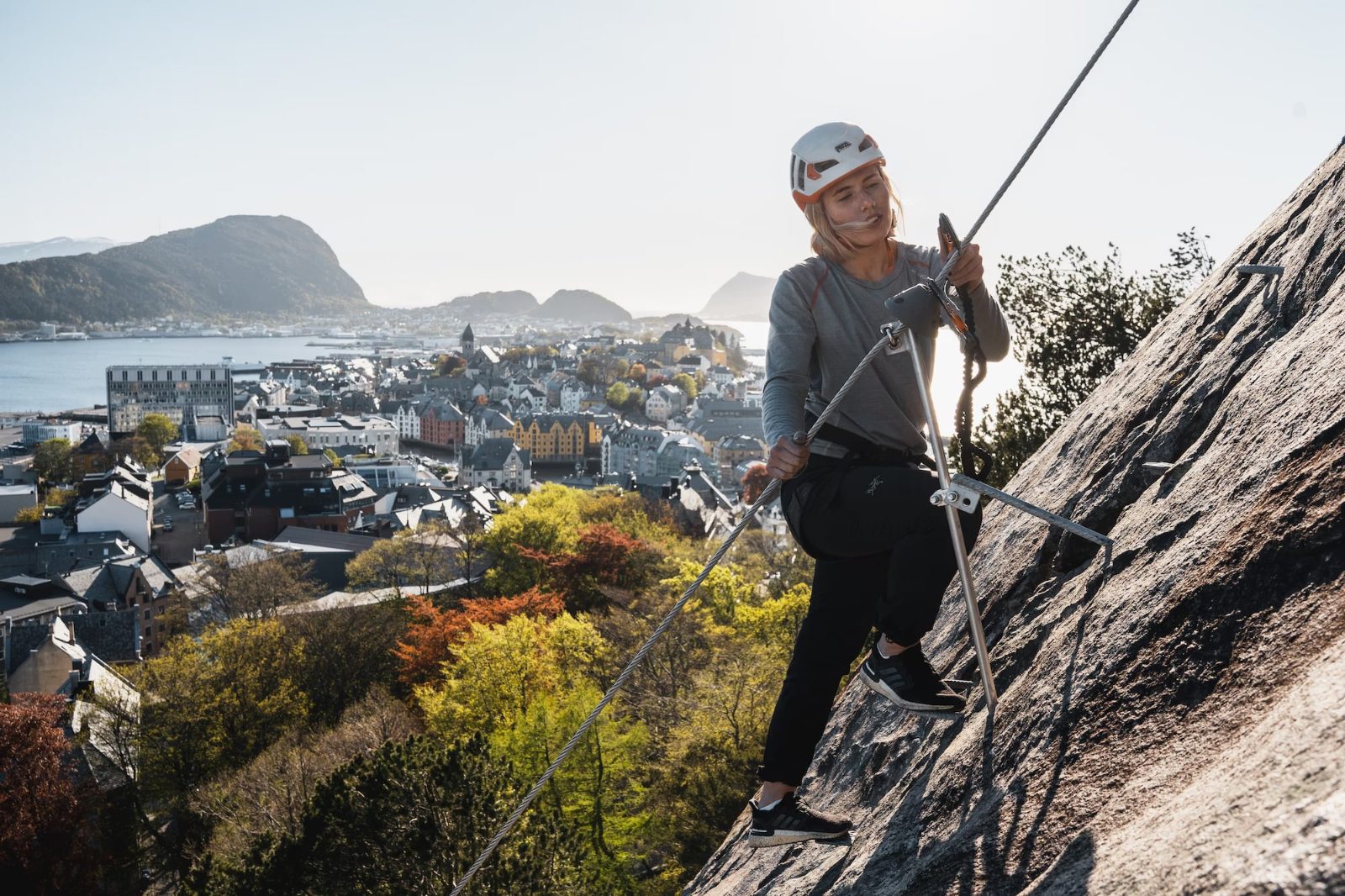
The via ferrata route in Ålesund employs certified steel cables, permanent anchors, and standardized harness systems designed to prevent falls. Climbers remain clipped to the cable at all times through a dual-attachment system. Understanding the equipment and protocols determines whether the experience matches your risk tolerance.
Quick answer
Is via ferrata safe for participants following proper protocols? Yes—the Ålesund route uses a continuous steel cable system with permanent anchors rated to withstand forces far exceeding body weight, and climbers wear harnesses with dual lanyards that maintain constant attachment. The activity carries inherent height exposure and physical demands, but the engineering reduces fall risk to near zero when equipment is used correctly. Weather conditions and individual fitness levels remain the primary variables affecting safety.
The steel cable anchored into the rock face above Ålesund supports forces exceeding 2,200 kilograms—far beyond what any climber generates during a slip. This engineering margin defines modern via ferrata safety: controlled exposure rather than eliminated risk. Via ferrata safety in Ålesund depends on three layers. The permanent infrastructure—cables, rungs, anchor points—undergoes annual inspection by certified technicians. The harness system uses two lanyards with shock absorbers, ensuring one attachment remains clipped while the other transitions past an anchor point. Human judgment forms the third layer: recognizing when weather, fatigue, or skill gaps make turning back the correct decision. The route's 418 steps of vertical access place climbers on exposed rock 200 meters above sea level. The cable does not prevent a stumble—it arrests a fall, transferring load through the harness to your legs and core rather than into freefall. Lanyard shock absorbers extend during sudden loading, dissipating energy that would otherwise concentrate at the attachment point. This mechanical advantage makes the system forgiving of mistakes, but not immune to them. Statistical risk remains low. Norwegian via ferrata routes report fewer than one serious incident per 50,000 ascents, with the majority involving pre-existing medical conditions rather than equipment failure. The Ålesund route eliminates the two deadliest variables found in alpine climbing—loose rock and unprotected sections—by fixing the path and the protection into a single system. What remains is exposure managed by hardware, where following the attachment protocol and respecting weather windows reduce risk to levels comparable to advanced hiking. The question is not whether the cables will hold. The question is whether you will clip both lanyards, recognize deteriorating weather, and assess your physical reserves accurately enough to descend before they deplete.
“The cable does not prevent a stumble—it arrests a fall, transferring load through the harness rather than into freefall.”
Via ferrata climbing demands certified safety equipment and proper preparation before attempting the Ålesund route.
Understanding safety on Via Ferrata Ålesund requires recognizing the difference between protected climbing and complete security. Many incidents stem from misunderstanding how the cable system functions and failing to account for environmental factors that affect grip and visibility.
Clipping only one carabiner to the cable
Always keep both carabiner attachments engaged on the steel cable. Moving past an anchor point requires alternating clips—detach one, pass the anchor, reattach, then move the second. Never leave yourself completely unclipped.
Trusting the cable to prevent all falls
The cable arrests falls but does not eliminate them. Maintain three points of contact with the rock face at all times. The via ferrata system limits fall distance; it does not prevent the initial drop or impact against the wall.
Ignoring surface conditions after rain
Wet rock and metal rungs become extremely slippery, multiplying fall risk even with proper attachment. Check the forecast before ascending and postpone if rain is predicted or the route shows moisture from recent weather.
Continuing in deteriorating visibility
Fog rolling in from the fjord can obscure the route within minutes, making it impossible to locate the next anchor point or foothold. Descend immediately if visibility drops below 20 meters—waiting on the wall increases exposure to cold and disorientation.
The safest window for climbing is between 08:00–18:00 to ensure optimal daylight visibility. Climbing outside these hours or during inclement weather significantly increases risk due to slippery rock surfaces and poor visibility.
Mild, 10°C to 18°C; stable conditions
These months offer the most reliable daylight and dry rock faces for safer ascents. Always check local forecasts before starting the climb.
Cooler, 5°C to 14°C; potential rain
Unstable weather patterns require caution as wet rock increases slipping hazards. Ensure daylight remains sufficient for the duration of the climb.
—
Arriving early minimizes time pressure, allowing for a steady, controlled pace on the route. Better conditions are typically found during these windows.
Verdict: The best time to climb is during the 08:00–18:00 window within the summer months of June through August when weather stability and daylight are at their peak.
Access to the via ferrata route itself is free of charge. Financial considerations are limited to optional professional guiding services or the rental of necessary climbing equipment.
Verdict: The entry fee is 0 NOK, and the total cost for an adult depends entirely on whether they choose to hire professional guides or rent climbing gear.
Everything you need to know about is via ferrata safe
The route is designed for climbers with varying experience, provided you follow established guidelines. It is via ferrata safe to attempt if you use proper protective gear and remain clipped to the steel cable at all times.
Professional maintenance and regular inspection of the iron rungs ensure the path remains secure. You should always verify weather conditions before starting, as wind or rain can impact the safety of the vertical terrain.
To adhere to safety standards, you must wear a climbing harness, a shock-absorbing lanyard, and a certified helmet. Many visitors choose a guided via ferrata Ålesund tour to ensure they have the correct setup and oversight.
The primary risks involve rockfall or improper use of gear, which is why following instructions is vital. Proper focus and avoiding overcrowding on the anchors help maintain a high level of safety while navigating the cliff side.
The best arrival window is 08:00–18:00 to ensure optimal daylight visibility and stable weather. Climbing within this time frame allows for better grip and visibility on the rock face.
Accessing the start involves a climb of 418 steps from the park. This approach is well-marked, but it requires basic physical fitness before you reach the actual climbing wall.